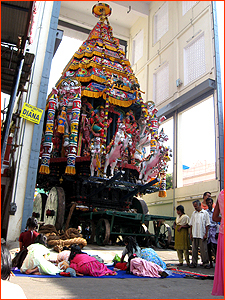



As we know that worship is only the powerful way to impress the God. With the help of worship we can make our luck or reduce our vibrations in the life. According to the Vedic religion worship has such a powerful value which can make our luck. In the ancient time, many great philosophers think that our luck is totally depends on the position of different planets. So, according to the research they got that worship is the only way to impress them and save the vibrations in our life. Yes, of course, it is possible to change the way of life and the position of planets through the reliance on the God, the one who control the planets and all the Milky Way. There are so many different types of “Puja” or “worships” according to Vedic Astrology.
In the Hindu Religion. According to dharma Gurus or Experts, Worship or puja is always doing with free mind with plain clothes. At the time of eating some ritual should be performed to make sure holy qualities and concentration of the devotee.
The Idol worship – Murti puja
Although, moorti is not considered as God itself but it is considered to be filled with the God’s Power. Our worship creates some power with moorties that help us to make direct communication with the God. In short we can say moorties are work as a bridge between God and Person.
How to do worship- Worship or puja is a sacred of honor, respect, high regards or worship from the devotee towards the God. Worship could means different for the different people. For worship you all need to have a soft or devoted heart with full of love for the respected God. The God overlooks the shortcoming of men if they follow the path of religion with full of devotion.
There are so many type of worship in the Hindu Religion which has different effect.
1. Navgraha Puja
2. Idol Dev Puja
1.Navgraha Puja:
(i)Surya Puja(Sun): Surya is one of the chief, the solar god. He has hair and arms of god. Surya is said to the one of the eight form of Shiva called Asthamurti. The grain associated with the God Surya is whole wheat and the number associated is 1.
(ii)Chandra(Moon): Chandra is also known as Soma. He is described as fair, young, beautiful, having in his hands a lotus. He rides his chariot across the sky every night which is pulled by ten white horses or an deer. He is connected with dew. In fact he is one of the gods of fertility. He is also called night lord and in Sanskrit it is called Nishadipati (Nisha=night; Adipathi=Lord).
(iii)Mangal(Mars): He is the son of Bhumi “Bhauma” in Sanskrit. He is the God of war and celibate. He is the owner of Scorpio and Aries Sign. He represents confidence and ego. The color of Mangal is painted red or we can say flame red color. He has four-armed, carrying a spear, trident, club, lotus and a. His mount is ram. He presides over Tuesday. Mangal Puja liberates one from debts. There are only two temples are available in India, of which one of them is in Maharashtra(Amalner) and the other one is in Tamilnadu (Vaitheeswaran Kovil).
(iv)Budha(Mercury): He is the son of Chandra with Tara. He is the goddess of Merchandise. Budha deva Brings many benefits like healthy progeny, eliminating difficulties, brings wealth, possession of fertile lands etc. Budha presides over 'Budh-var' or Wednesday.
(V)Brihaspati(Jupiter): He is the Guru of all Devas, the chief offerer of prayers and sacrifices. He is simply called as Guru. According to the Hindu scriptures, he was a Shukracharya, the guru of Danavas. Guru is usually depicted with an elephant or chariot drawn by eight horses as his vehicle. He is also depicted on pink lotus flower.
(vi)Shukra(Venus): Shukra is the name the son of Ushana and Bhrigu, and guru of the Daityas and Asuras, identified as the planet Venus. He is Rajas in nature and represents pleasure, wealth, and reproduction. He presides over 'Shukra-var' or Friday.
(vii)Shani: Shani is one of the nine primary space beings in Hindu astrology i.e. Vedic astrology. Shani is embodied in the planet Saturn. Shani is the Lord of Saturday. His direction is west and his element is air. He is very hard in nature and represents learning the hard way, Career and long life. The favourite color of Shani Deva is Black color.
According to the Hindu Vedas the word Shani means who moves slowly. Shani is actually a son of Surya (Sun) and his wife Chhaya. It is said that when Shani opened his eyes very first time the sun went into an eclipse, which clearly denotes the effect of Shani on astrological charts called horoscope. He is black in color, clothed in black and holding two daggers, a sword, arrows and mounted on a black crow. He presides over 'Shani-var' or Saturday.
(viii)Rahu: In the Indian astrology Rahu is a God of the North lunar node, the point where the Moon's orbit crosses the ecliptic. Rahu is the head of the eclipses. The rahu kala is considered as inauspicious. Rahu is responsible for solar eclipse, when Sun, Moon, and Rahu planet falls in the same zodiacal longitude then a solar eclipse takes place. Specially, people in the south India give utmost importance to Rahu Kaal. Some auspicious activities like engagement, any purchase of car, gold, home, shares, gold or starting new business or trading activity are avoided in such time period. Rahu kaal is only considered for continue already started work.
(ix) Ketu: Ketu is the Lord of Descending. He is known as the dragon's tail, It is believed to have a tremendous impact on human lives and also the whole creation. In some special conditions it helps someone to achieve the peak of success and fame. He is Tamas in nature and represents supernatural influences.
2. Idol Dev Puja :
(i)Ganesh Ji Puja: traditionally, Lord Ganesh son of lord shiva is worshipped first among all Gods. Lord Ganesh removes all obstacles which might come while performing any type of auspicious work like marriage, house warming etc. Hence, lord ganesha is worshipped always first while starting all puja and any type of auspicious activities. Astrological benefit of performing Ganesh puja are To remove any obstacle coming in your way, To have a healthy mind and good spirit, To obtain Sidhi For overall materialistic and spiritual development. To maintain peace and harmony.
(ii)Satyanarayan pooja - This puja can be performed on any day. However, Purnima (full moon night) and Maker Sankranti are considered as the most auspicious days for this pooja. The appropriate time of this pooja is in the evening but we can also perform in the morning.
It is typically performed by families to preserve and enhance family harmony and to bring success and enjoyment to all. The part is simple and having some fun and all family members take part.
(iii)Shiva Poja: In popular Hinduism, Shiva is often represented as a destructive aspect of Brahman and entitled 'The Destroyer’. He is the supreme power in this universe. Devotees believe that he can be easily happy but he becomes angry easily and very early also just like chld. His name means kind, auspicious and gracious. The worship of God Shiva improves harmony in the marriage and to help integrate material and spiritual progress.
(iv)Hanuman Puja-Hanuman puja is really beneficial for all those people who want to achieve great strength, wisdom and knowledge. The worship of Shri Hanuman ji cures all illness and gives courage and energy to fight the illness. Hanuman Puja provides peace of mind and strength as well.
(v)Durga Maa: The actual worship of the Goddess Durga as set by the Hindu scriptures falls in the month of Chaitra, which roughly overlaps with the month March or April and is called “Basanti Durga Puja”. This ceremony is not observed by many and is restricted to a handful in the state of West Bengal. The more popular form, which is also known as Sharadiya (Autumnal) Durga Puja, is celebrated later in the year with the dates falling either in September or October, this is one of the most important celebration in the West Bengal. Durga puja is for the elimination of all suffering through the grace of the Divine Mother and to get rid of evil tendencies in us.
(vi)Vishnu: Vishnu is God of Preservation. Lord Vishnu is also the one who is the supreme of the sky. Lord Vishnu is supposed to be dark as the clouds and also has a beautiful form. God brings us smooth life, peace and harmony in the family, to improve family relations, for sustaining the family, for departed souls.
(vii)Lakshmi: This Hindu goddess symbolizes wealth, beauty, spiritual and worldly prosperity. She is the wife of God Vishnu, the Hindu God who represents the preserving principle. In this regard, Lakshmi Ji also represents the divine mother, bringing love and grace. Goddess Lakshmi is represented as a youthful and beautiful woman, either sitting or standing on an open lotus flower. The lotus describes the purity. Goddess Lakshmi Ji is having four arms, showing the four ends of life, wealth, righteousness, desires and freedom from the cycles of birth and death. She is shown gold coins flowing from her hands or with gold coins, indicating continues flow of riches.
(viii)Saraswati: Goddess Saraswati is one such god who is worshipped as the Goddess of knowledge and arts. She represents the free flow of knowledge and awareness. Goddess saraswati provide human beings the powers of learning, speech and knowledge and she is also called as "The Mother of Vedas " and the repository of Brahma's creative intelligence. Saraswati is also known as the goddess of speech i.e. Vak Devi.
Usually rides a swan or a peacock, with playing music on Veena. This Goddess is very famous among the creative people and students as she is believed to provide huge knowledge to one, who is her devotee.
(ix)Ram Darbar: According to the Hindu Vedas, Ram is the seventh avatar of Vishnu bhagwan and he was the king of Ayodhya. Rama is considered to be the most important avatar of bhagwan Vishnu. He is also one of the most popular gods in Hinduism and is widely worshipped throughout Nepal and India. Rama was born in Suryavansha Kul later known as Raghuvansha after king Raghu. When depicted with his brother Lakshman and wife Sita, with Hanuman kneeling in a state of prayer, this form is called Ram Parivar or Ram Darbar, and is the typical match depicting Bhagwan Rama with his family in Hindu temples.
No matter what it is that you need at that time, praise and worship songs can provide basic value to your life more than that you need. They can keep you focused, educate you, and help keep your stress level down and just as important inspire you to great things in your life and for others.